
2026 - Volume #50, Issue #2, Page #23
[ Sample Stories From This Issue | List of All Stories In This Issue | Print this story
| Read this issue]
New Uses For Bio-Oil
 |

“We discovered we could make biochar and bio-oil,” says Mba-Wright. “We’ve explored so many applications for them. One of our latest studies looked at using bio-oil with old oil wells.”
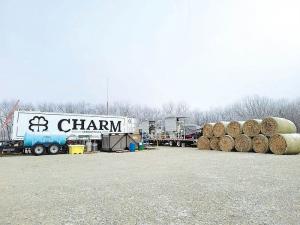
Mba-Wright is working with Charm Industries. The California-based company specializes in carbon sequestration. They provided the pyrolysis equipment that converts crop residue into bio-oil.
When injected into the wells, the bio-oil solidifies and seals the well, addressing an environmental concern about leaking hydrocarbons. Mba-Wright estimates there are as many as 800,000 undocumented, unplugged, abandoned oil wells. With an average width of 1.6 ft. and a depth of nearly 2.6 miles, it would take more than 216,000 gal. of liquid. Capping them can cost a million dollars each.
“A lot of companies have just walked away from their wells,” says Mba-Wright. “They need to be closed due to water quality and other pollution. As social awareness grows, it’s a problem they’re trying to solve.”
Mba-Wright’s research suggests that a network of 200 mobile bio-oil production facilities could be both economically and technically feasible. Each facility would be designed to process about 10 tons of feedstock per day. The unit cost is estimated at about $1.3 million.
The study estimates that the proposed system could sequester carbon dioxide at about $152 per ton, making it competitive with other carbon dioxide removal methods while requiring far less upfront investment.
The process exposes biomass to a few seconds of high heat, with temperatures that can exceed 1,000 F. The process produces biochar, which can be sold as a soil amendment, and bio-oil, a dense, carbon-rich fluid. While there are other possible uses for the bio-oil, most would require additional processing. Sealing oil wells does not.
“Using excess crop residue (30 to 70%, depending on farm practices and soils) biomass for injection in oil wells would be a win for farmers and for oil well owners,” says Mba-Wright.
Contact: FARM SHOW Followup, Mark Mba-Wright, Iowa State University, 305 Lab of Mechanics, Ames, Iowa 50011 (ph 515-294-0913; markmw@iastate.edu).
Click here to download page story appeared in.

Click here to read entire issue
To read the rest of this story, download this issue below or click here to register with your account number.